The Recycled Furniture Plastic Project

Diane Leclair Bisson has investigated manufacturing technologies suited to recycled plastic furniture, with a particular emphasis on material experimentation through compression molding, thermoforming, and rotomolding. These processes were employed to transform post-consumer and post-industrial polyethylene (PE) and polypropylene (PP)—among the most abundant plastic waste streams—into furniture prototypes ranging from industrially scalable objects to limited-edition series.
Works produced through this research include the Gonflé Stool, the Haricot Chair, and a series of recycled plastic tiles.
This body of work advances strategies aimed at diverting plastic waste from landfills and reducing overall environmental impact through material revalorization.
—
Financial support: FRDP Grant, Concordia University, 1995–1998.
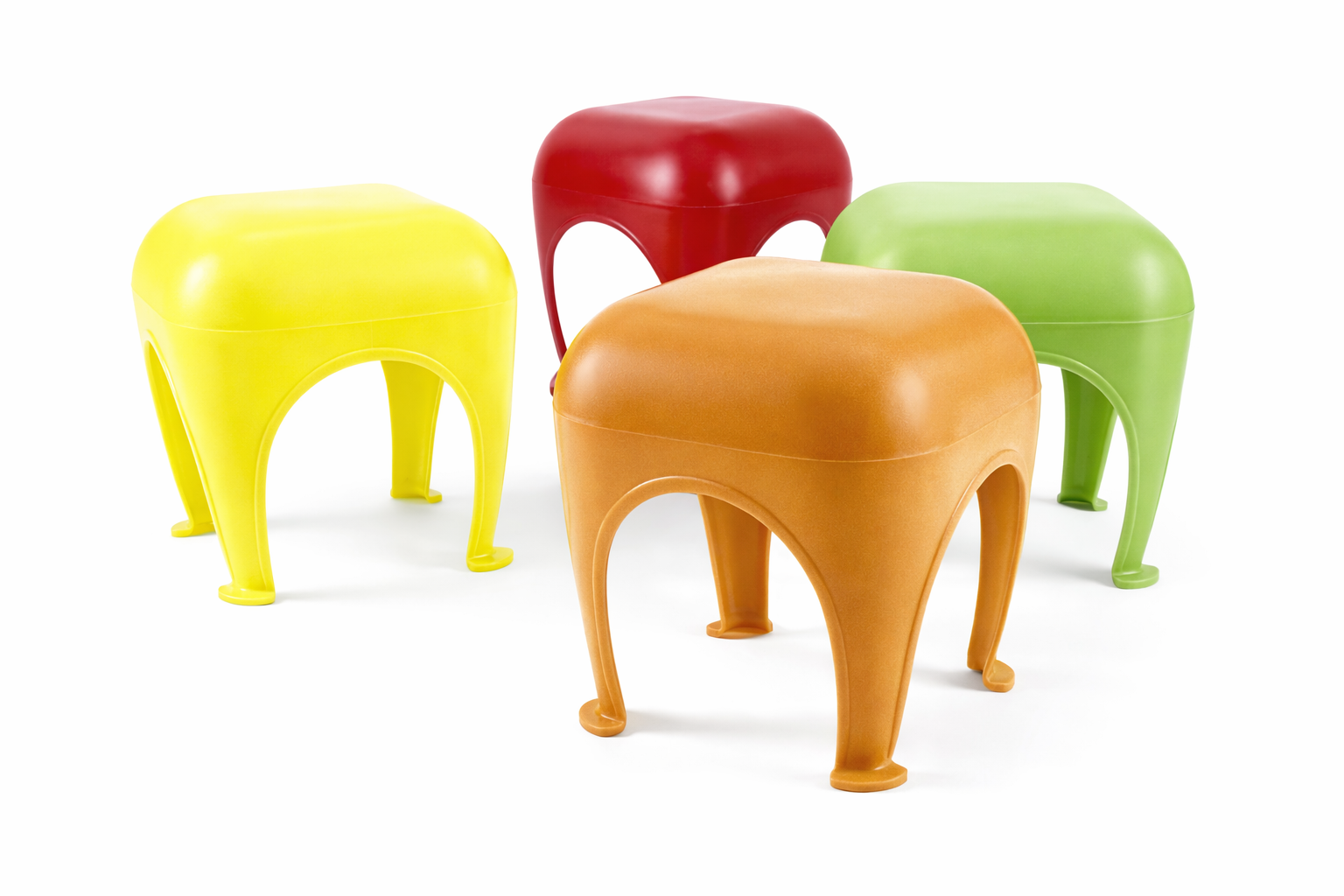
Le Gonflé stool
Le Gonflé Stool is produced from 100% recycled post-industrial polypropylene (PP) by rotational molding.
—
Collaboration: Michel Labonté, plastic engineer
Manufactured in green, orange, red, yellow by Canamex, Québec, 1996–1998
Dimensions: 41 cm x 41 cm x 43 cm h
Image: Justin Bisson-Beck
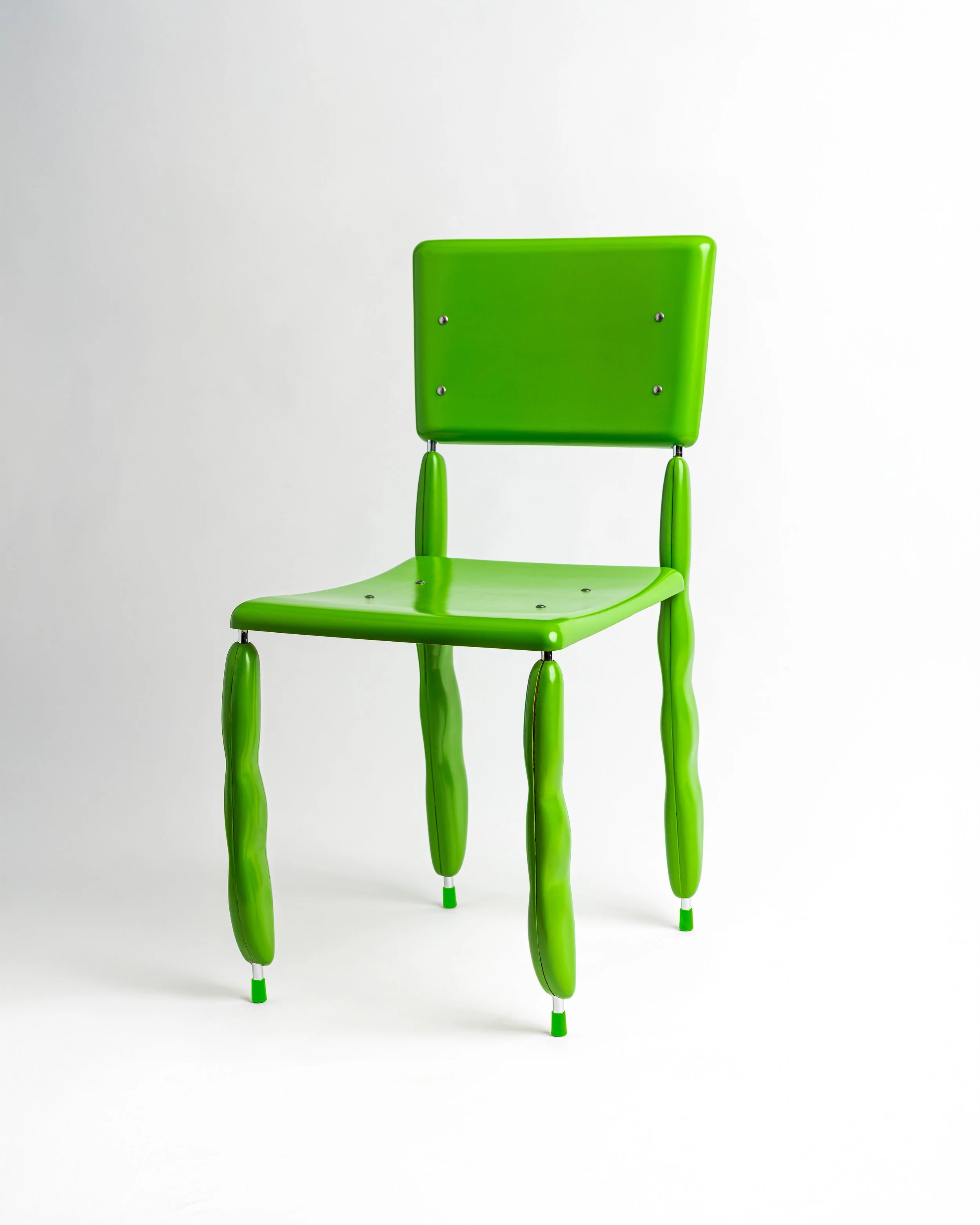
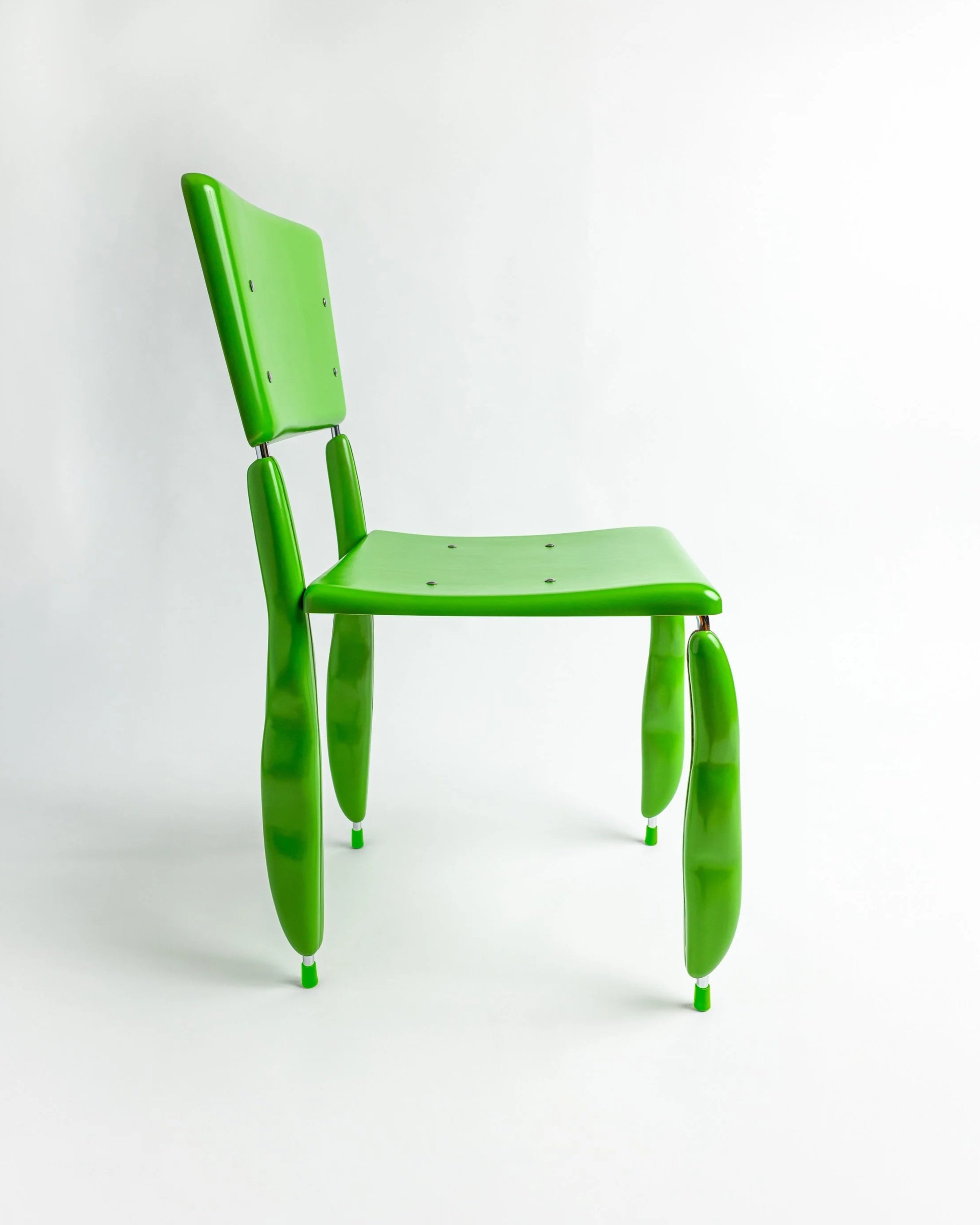
Haricot Chair
The Haricot Chair is a prototype fabricated entirely from 100% recycled post-consumer polypropylene (PP). The material is sourced from the green caps of orange-juice bottles, which are collected, sorted, and reprocessed through injection molding into flat sheets. These sheets are subsequently thermoformed and assembled to generate the chair’s structure, demonstrating the potential of single-use plastic waste to be revalorized into durable, functional furniture.
—
Collaboration: Michel Labonté, plastic engineer
Dimensions: 43 cm x 41 cm x 81 cm h
Images: Justin Bisson-Beck
Plastic Tiles
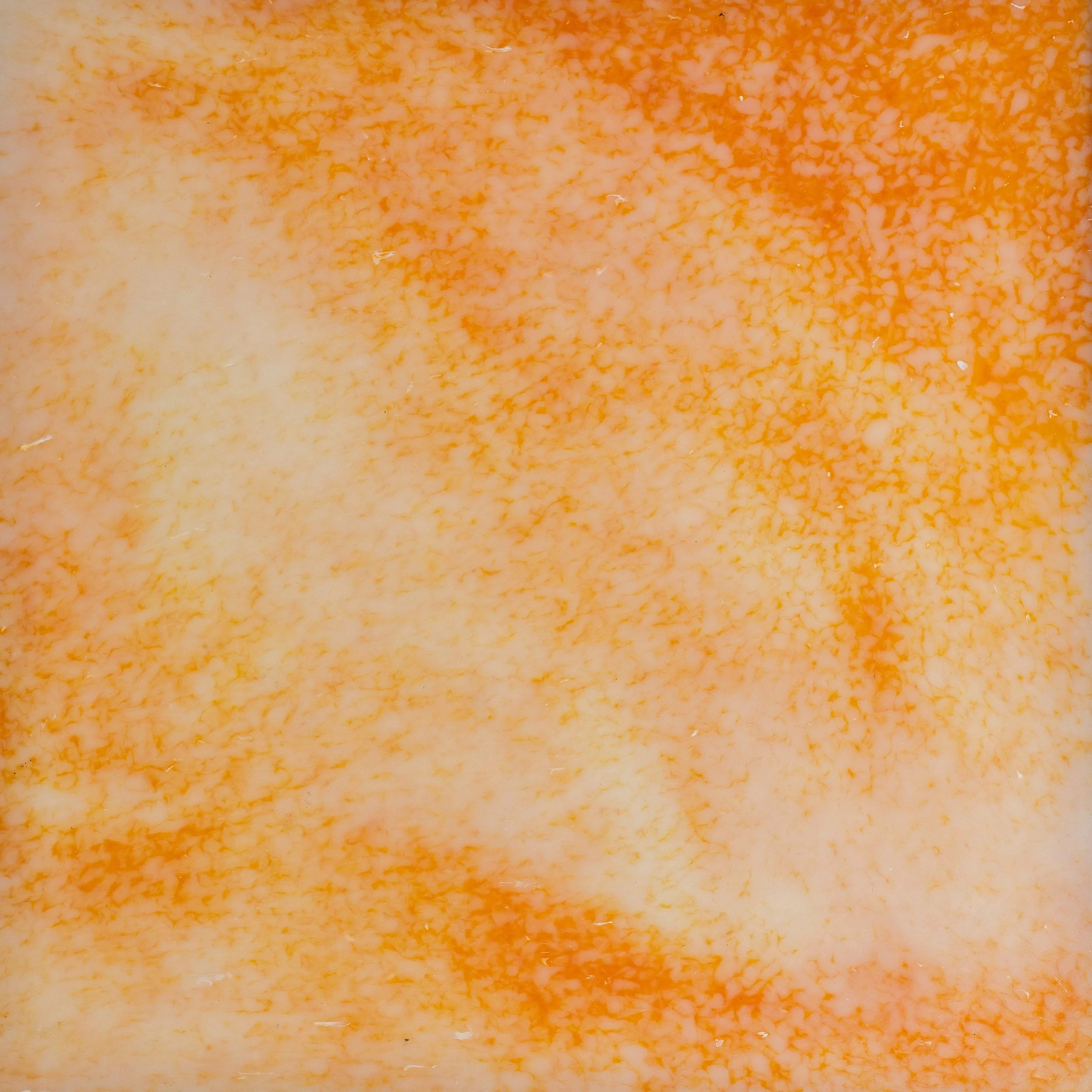
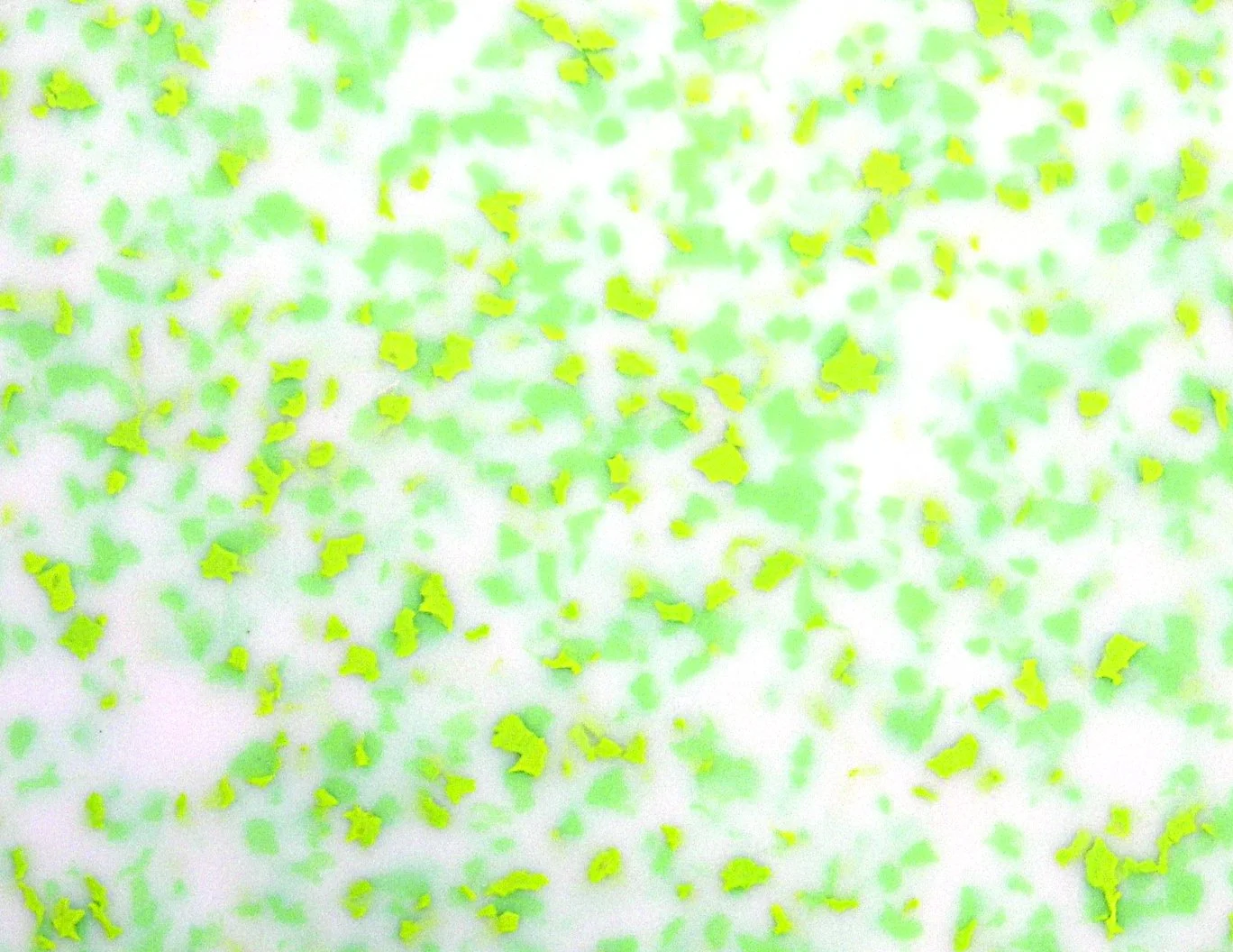
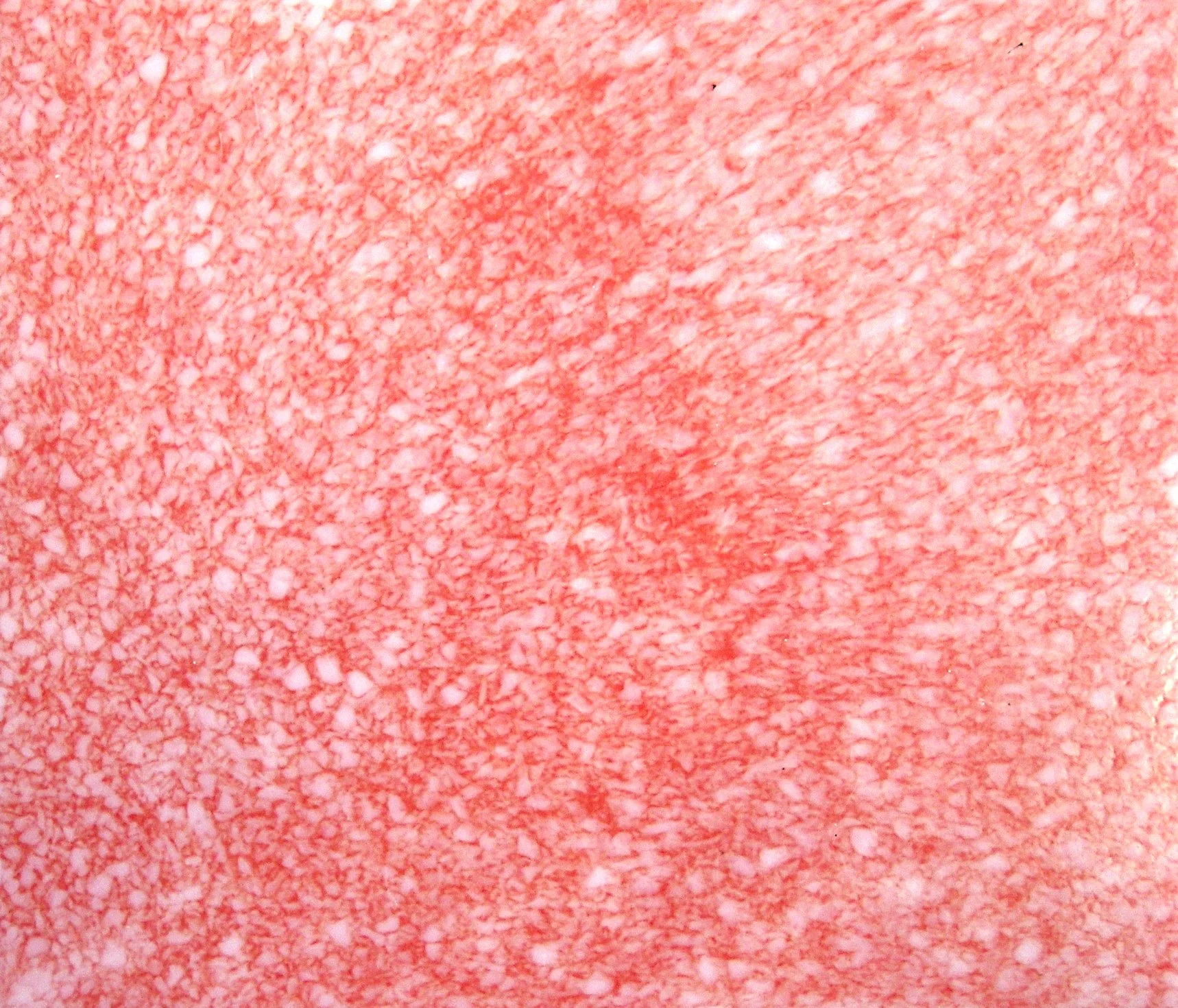
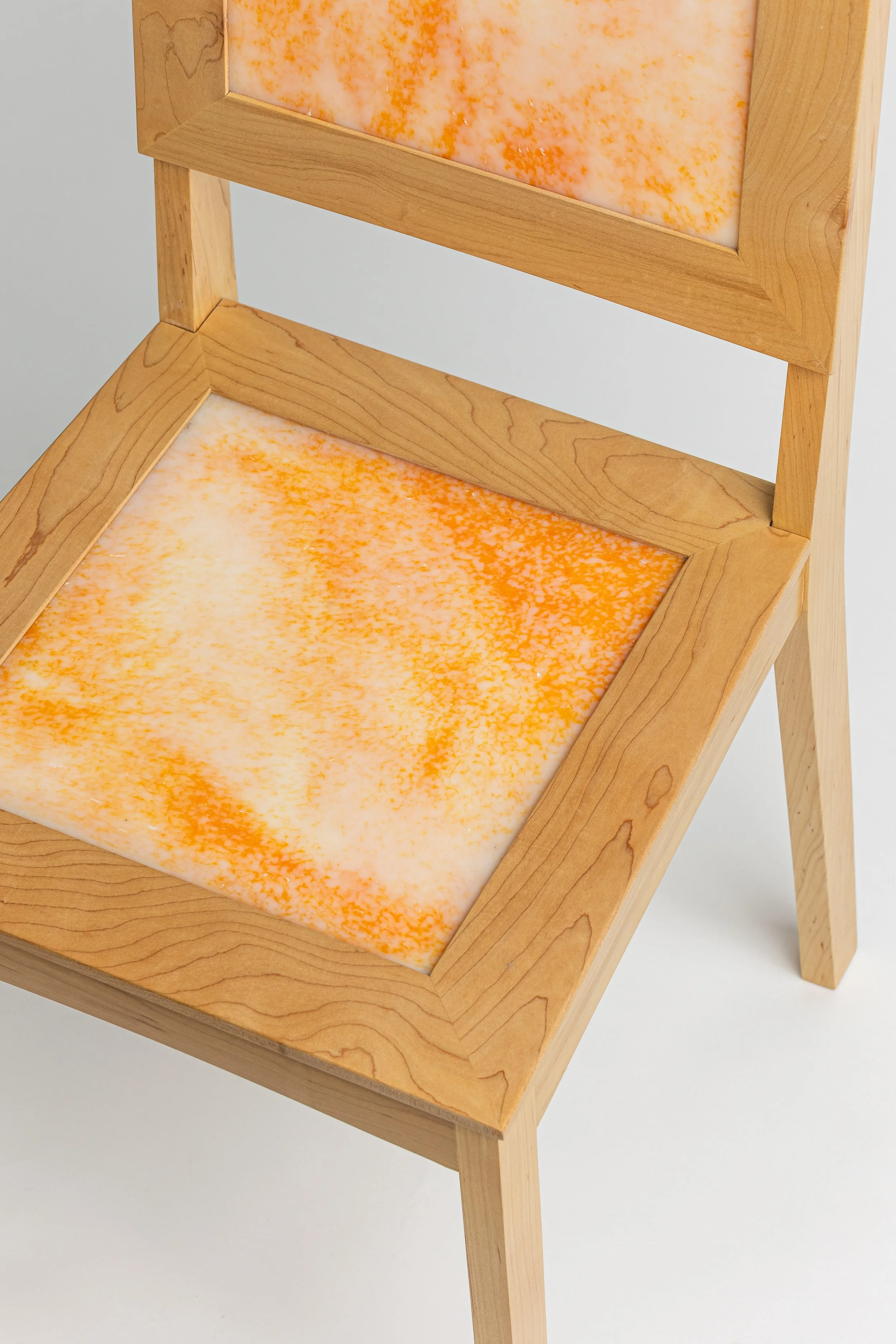
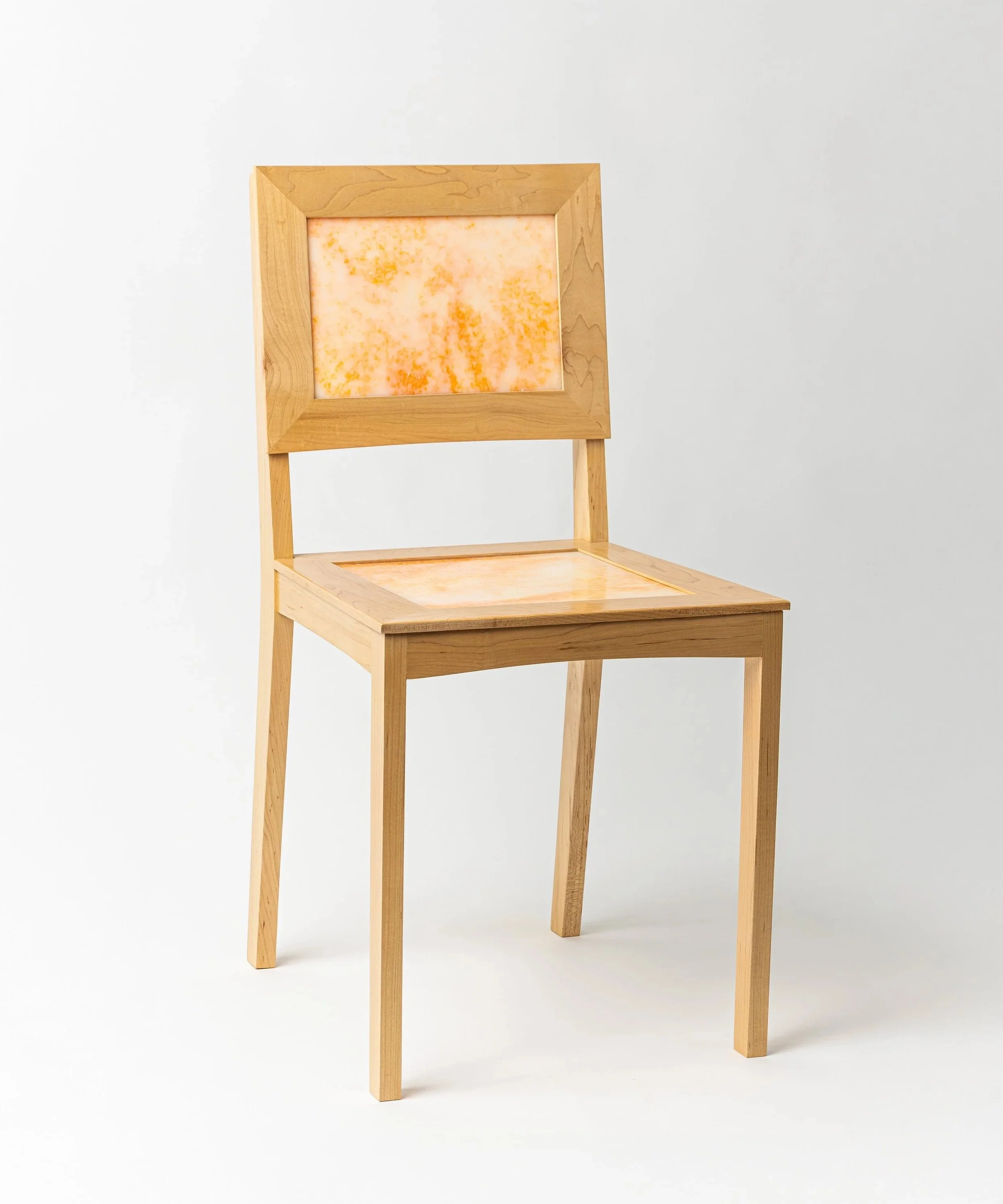
These tiles are fabricated through the compression molding of 100% recycled polypropylene (PP) and polyethylene (PE) regrinds and powders. The material is sourced from post-consumer and post-industrial waste streams. Their surfaces explore tactile variation, combining textures inspired by fruit skins—such as orange peel—with contrasting flake patterns that reveal the material’s recycled origin.
The tiles were developed as part of a limited production series and applied in the fabrication of a school chair prototype and a multi-tile table, demonstrating their structural and aesthetic versatility.
—
Collaboration: Centre de développement des composites du Québec (CDCQ)
100% recycled post-industrial polypropylene (PP) and polyethylene (PE)
Images: Bob Beck